Share on LinkedInShare on LinkedIn

PODCAST · 08 APRIL 2024

Direct Examination: To Lead Or Not To Lead (Podcast)

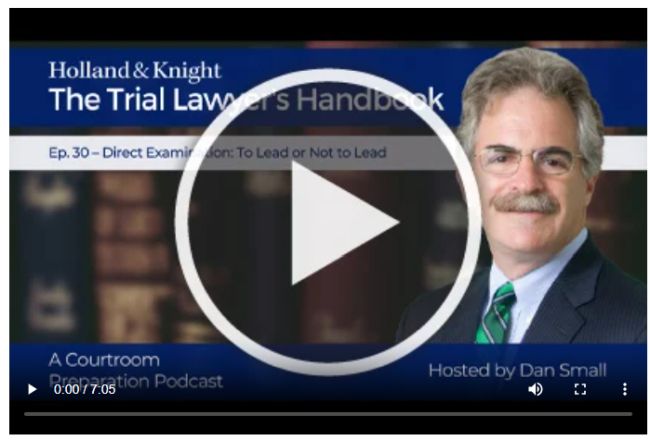
In this episode of "The Trial Lawyer's Handbook" podcast series, litigation attorney Dan Small explores how to avoid asking leading questions during direct examination.

United StatesLitigation, Mediation & Arbitration

1449070a.jpg

In this episode of "The Trial Lawyer's Handbook" podcast series, litigation attorney Dan Small explores how to avoid asking leading questions during direct examination. The Federal Rules of Evidence state that lawyers should not use these types of questions when examining a witness, except when necessary to develop the witness' testimony. Mr. Small recommends using concise and straightforward "W" questions — who, what, when, where, why and how — to allow witnesses to freely share their story without shifting the jury's focus to the attorney. He also notes that asking leading questions can leave a negative impression on judges, which can be fatal to a lawyer's case. He emphasizes that by refraining from asking leading questions, the overall case can be strengthened.

We operate a free-to-view policy, asking only that you register in order to read all of our content. Please login or register to view the rest of this article.

The content of this article is intended to provide a general guide to the subject matter. Specialist advice should be sought about your specific circumstances.

See more popular content from
