Fasken's lawyers have begun a series on the role of critical
minerals in energy transition from a Canadian perspective, bringing
fresh insights on issues of mining, energy, environmental,
Indigenous, climate change, tax, and national security. In the
first, second, third, fourth, fifth and sixth instalments of this
series, we examined the role of the Canadian federal government as
well as all the Canadian provinces. In this seventh and last
instalment, we examine the initiatives taken by the territories:
Nunavut, the Northwest Territories and Yukon.
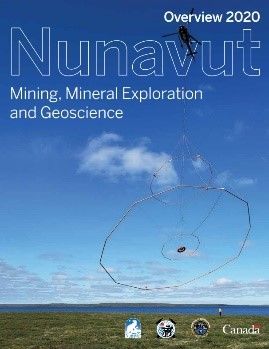
The Government of Nunavut has released a 2020 Overview on
Mining, Mineral Exploration and Geoscience 1.
Nunavut spans two million square kilometres. It represents 25%
of Canada's land mass. It has a population of 39,553 people and
they live in 25 communities. 84 percent of the residents are Inuit.
Its capital is Iqaluit.