Share on LinkedInShare on LinkedIn

ARTICLE · 24 SEPTEMBER 2025

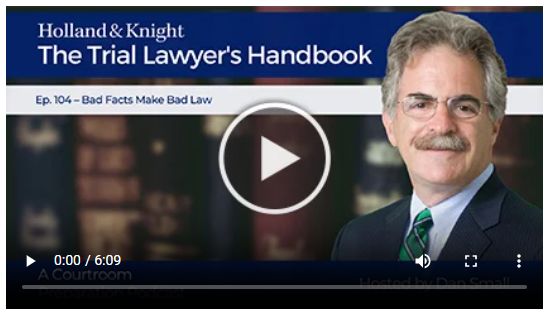
Podcast - Bad Facts Make Bad Law

In this episode of "The Trial Lawyer's Handbook" podcast series, litigation attorney Dan Small explains the exclusionary rule, which states that evidence obtained by illegal methods...

United StatesLitigation, Mediation & Arbitration

1679546a.jpg

In this episode of "The Trial Lawyer's Handbook" podcast series, litigation attorney Dan Small explains the exclusionary rule, which states that evidence obtained by illegal methods must be excluded at trial. In the Cammarata drugs-and-murder Racketeering Influenced and Corrupt Organizations Act (RICO) case, a voluntary eight-page confession was initially suppressed under the exclusionary rule because the Texas Rangers did not include the arrested individual's last name on the warrant. Mr. Small appealed the decision, and the U.S. Court of Appeals for the Fifth Circuit ruled in his favor, making the confession admissible at trial. The ruling helped establish the "good-faith exception" to the exclusionary rule, which was soon officially adopted by the U.S. Supreme Court.

We operate a free-to-view policy, asking only that you register in order to read all of our content. Please login or register to view the rest of this article.

The content of this article is intended to provide a general guide to the subject matter. Specialist advice should be sought about your specific circumstances.

See more popular content from
