Share on LinkedInShare on LinkedIn

ARTICLE · 21 JANUARY 2013

If You Don’t Want Your Registration Cancelled, Grant Your Opponent A Covenant Not To Sue

The United States Supreme Court, which rarely gets involved in trademark cases, has ruled that when a Defendant in a Trademark infringement case countersues to cancel the Plaintiff’s registration, the Plaintiff can divest a court of jurisdiction over the cancellation by granting the Defendant a broad covenant not to sue.

United StatesIntellectual Property

The United States Supreme Court, which rarely gets involved in trademark cases, has ruled that when a Defendant in a Trademark infringement case countersues to cancel the Plaintiff's registration, the Plaintiff can divest a court of jurisdiction over the cancellation by granting the Defendant a broad covenant not to sue.

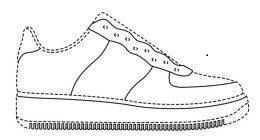
In Already LLC, d/b/a/ YUMS, v. Nike, Inc., 568 U.S. ____(2013), Nike sued Already over an alleged violation of a trade dress registration for a shoe:


Already counterclaimed to cancel the registration. In response, Nike granted Already a very broad promise not to sue, dismissed its complaint, and then moved to dismiss the counterclaim as moot (i.e., unnecessary). Under Article III of the U.S. Constitution, federal courts do not have jurisdiction to hear a case where there is no real case or controversy. Hence, the trial court dismissed the counterclaim because the court could not envision any scenario under which the defendant could ever be

We operate a free-to-view policy, asking only that you register in order to read all of our content. Please login or register to view the rest of this article.

See more popular content from

