
Share on LinkedInShare on LinkedIn

ARTICLE · 17 OCTOBER 2016

Accused Infringer Puts The Screws On Patentee

Proskauer Rose LLP
Proskauer Rose LLP
Contributor
Proskauer Rose LLP

Proskauer Rose LLP

Firm Overview Proskauer is an elite global law firm with more than 900 lawyers across key financial...

View firm profile
Explore more from Proskauer Rose LLP

The fact that the claims survived an anticipation challenge, however, did not mean that they would survive an obviousness challenge based on the same prior art references.

United StatesIntellectual Property

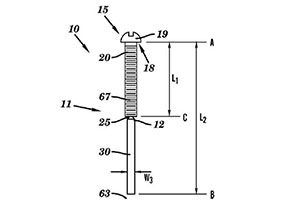
We wrote recently about a summary judgment decision in which Judge Indira Talwani found certain asserted claims of two patents on a type of breakable screw to be obvious in light of the prior art. This ruling came even though the patentee had produced some evidence of copying, and even though the accused infringer had not shown a motivation to combine. The case provides useful insights into the law on patent obviousness, and this post expands on the obviousness issues in more detail.

In a lengthy opinion addressing a number of different issues, Judge Talwani first ruled that several other claims in each of the patents were anticipated by the prior art, which included two examples of previously-available breakable screws. The specific claims at issue here, however, were deemed not anticipated because they added additional elements, such as describing particular lengths for a non-threaded screw portion.

We operate a free-to-view policy, asking only that you register in order to read all of our content. Please login or register to view the rest of this article.

See more popular content from



