
Share on LinkedInShare on LinkedIn

ARTICLE · 23 SEPTEMBER 2016

Do Banks Have A Fiduciary Duty To Shed Their BHC Status?

The last thirty years have witnessed a dramatic rise in bank adoption of the bank holding company ("BHC") structure. Inherent in this trend is an apparent accepted orthodoxy about the need of such structures from both a business and regulatory perspective.

United StatesFinance and Banking

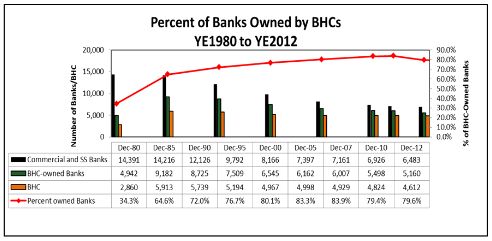
The last thirty years have witnessed a dramatic rise in bank adoption of the bank holding company ("BHC") structure. Inherent in this trend is an apparent accepted orthodoxy about the need of such structures from both a business and regulatory perspective. The percentage of U.S. banks owned by BHCs has more than doubled since 1980, from 34.3% to approximately 84% today.1

Federal banking agencies ("FBAs"), however, do not require banks to form a BHC.2 Thus, the uptick in BHC-owned banks has largely been driven by perceived legal, regulatory, and business advantages. Since 1980, the majority of banks presumably (1) identified significant advantages to forming a BHC that outweighed the increased costs of corporate governance and regulatory compliance and/or (2) saw their peers forming BHCs and generally accepted this industry trend as the orthodoxy of modern banking organization structure.

We operate a free-to-view policy, asking only that you register in order to read all of our content. Please login or register to view the rest of this article.

See more popular content from

