The current cost-of-living crisis means many workers struggling
to cope with inflationary pressures, with food, transport and
energy becoming significantly more expensive. If employers want to
offer employees a payment or allowance to help out, what are the
implications, and what is and is not allowed? Ius Laboris lawyers
in a range of countries explain.
What are the tax and social security consequences of making
payments to help employees with the cost of living?
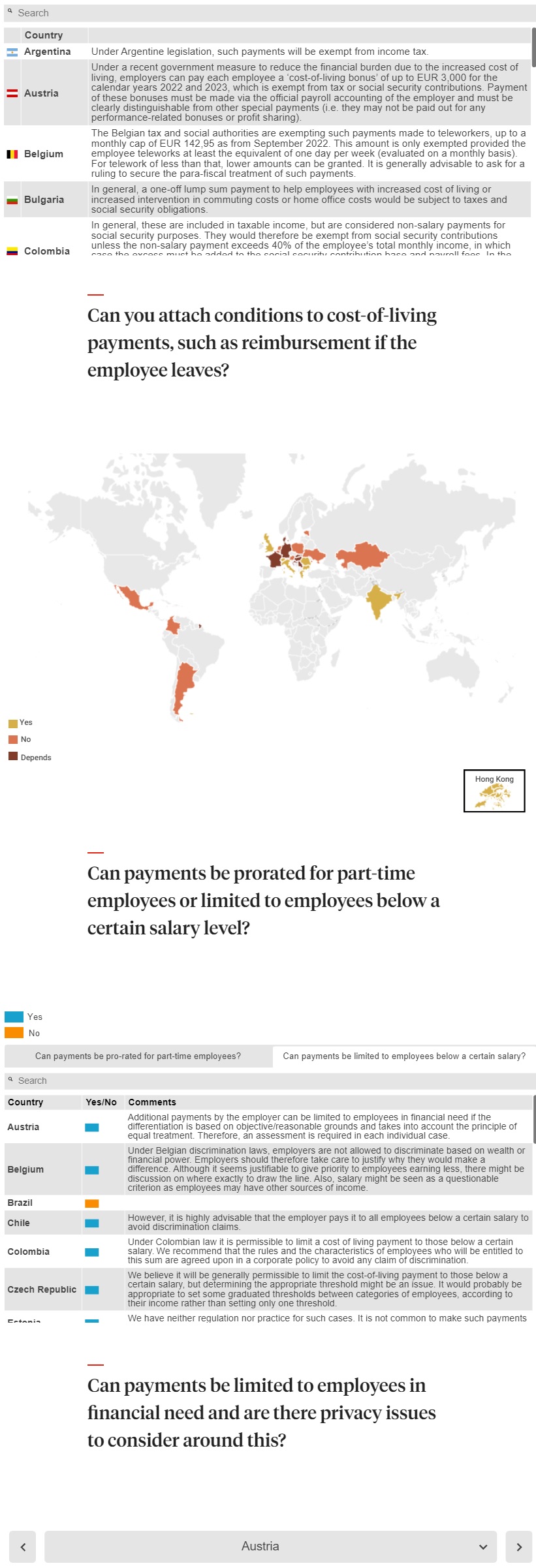
Additional payments by the employer can be limited to employees
in financial need so long as the differentiation is based on
reasonable grounds and considers the principle of equal
treatment.
The challenge in practice will be whether the employer has
enough information on the employee's concrete financial
situation to make an informed decision. If the employer already has
such information, it may still be questionable whether the employer
may make use of this information and if it may disclose it