


This time, we're finishing our review of the data for amicus briefs and won-loss records overall for the years 2005 through 2020.
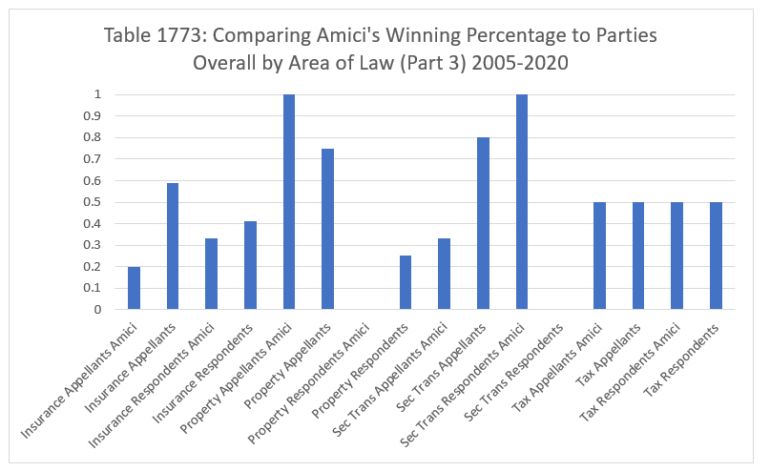
Appellants in insurance law cases won 58.82% of their cases to 41.18% for appellees. Amici fared far worse – appellants' amici won 20%, while appellees' amici won only one-third. In property law cases, appellants won 75% to 25% for appellees. Appellants' amici won all their cases; there were no appellees' amici.
Appellants won 80% of cases involving secured transactions. Appellants' amici won only one-third of their cases, while appellees' amici won all of their cases. Appellants and appellees in tax cases evenly split their cases, 50-50. Amici were the same: appellants' amici 50%, appellees' amici 50%.
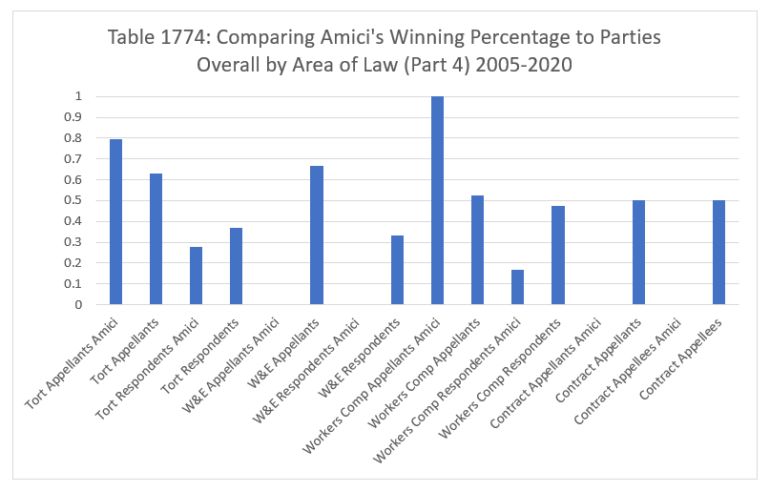
In tort law cases, appellants won 63.16% during these years while appellees won 36.84%. Appellants' amici won far more often – 63.16% to 36.84% for appellees. Appellants in wills and estates cases won two-thirds of all cases. There were no appellants' amici. Appellees' amici lost all their cases.
Appellants in workers' comp cases won 52.38% to 47.62% for appellees. Appellants' amici won all their cases, while appellees' amici won only 16.67%.
Join us back here later this week as we address a new issue.
Image courtesy of Flickr by Vivek Jena (no changes).
The content of this article is intended to provide a general guide to the subject matter. Specialist advice should be sought about your specific circumstances.
The content of this article is intended to provide a general guide to the subject matter. Specialist advice should be sought about your specific circumstances.



