Share on LinkedInShare on LinkedIn

ARTICLE · 29 MARCH 2023

Legal Limbo: How Low Can We Go? EPA Proposes National PFAS Limits In Drinking Water At Very Low Levels

On March 14, 2023, the U.S. Environmental Protection Agency (EPA) proposed what may be considered the most significant National Primary Drinking Water Regulation (NPDWR) to date pertaining...

United StatesEnvironment

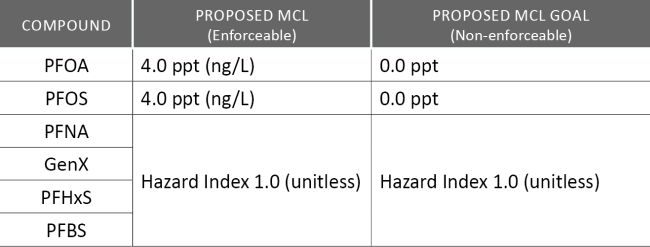
On March 14, 2023, the U.S. Environmental Protection Agency (EPA) proposed what may be considered the most significant National Primary Drinking Water Regulation (NPDWR) to date pertaining to per- and poly-fluoroalkyl substances (PFAS) in drinking water, which will have a ripple effect across the regulated community and business transactions nationwide. As authorized by the Safe Drinking Water Act (SDWA), the EPA proposed the following maximum contaminant levels (MCLs) and MCL Goals (MCLGs) for six PFAS compounds.

1298918a.jpg

For those who may not have seen the movie Dark Waters (or the seemingly daily headlines), PFAS are a class of thousands of "emerging contaminants" used in various manufacturing operations, firefighting foam, food packaging, textiles, cosmetics and many other products. Known as "forever chemicals" because of their resistance to breaking down in the environment, PFAS present potential health risks and have been found in many drinking water supplies.

We operate a free-to-view policy, asking only that you register in order to read all of our content. Please login or register to view the rest of this article.

The content of this article is intended to provide a general guide to the subject matter. Specialist advice should be sought about your specific circumstances.


See more popular content from
