Back-to-back clauses are a common feature of large international
construction projects, particularly in the infrastructure and
energy sectors, where works are delivered through multi-tiered
subcontracting structures. In such arrangements, employers and
subcontractors have no direct contractual relationship, a
separation commonly referred to as the principle of privity of
contract.1
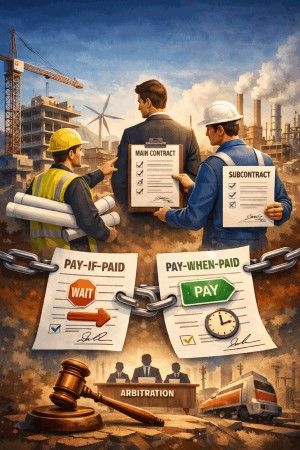
As a result, this contractual structure can create difficulties
when defects, delays, or payment disputes arise across the project
chain. To address these challenges, parties rely on back-to-back
clauses to align key contractual obligations and risk allocation
between the main contract and the subcontracts. When properly
drafted, these clauses promote contractual consistency and support
the efficient resolution of disputes, including in international
construction arbitration.