



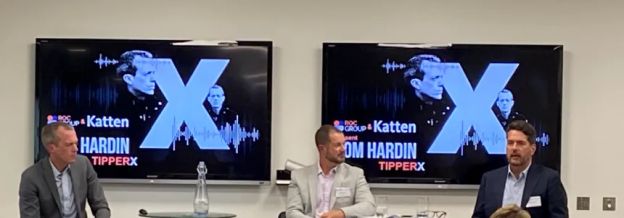
Katten recently hosted an interesting and insightful panel discussion on the latest market abuse trends in the UK and US. The session was presented Katten Financial Markets Regulatory Partner Neil Robson alongside RQC Group's CEO, Robert Quinn and featured the renowned speaker Tom Hardin, also known as "Tipper X". Mr. Hardin was an insider dealer that turned star witness and informant for the FBI, and has become one of the most prolific informants in securities fraud history. Mr. Hardin discussed the "Inside story of Tipper X", providing a fascinating insight into the challenges and pitfalls of his experience cooperating with the US government to build criminal cases in insider trading investigations in the financial services industry.
Some key takeaways from the session include:
- Financial Conduct Authority ("FCA")
enforcement. Neil explained that the FCA's tone on its
UK enforcement activities has become increasingly assertive since
the COVID-19 pandemic. This is exemplified through its most recent
description of its enforcement function, which now states that
"there are real and meaningful consequences for firms and
individuals" with an "aim... to detect serious
misconduct early so that we can intervene and prevent harm from
happening or continuing". The assertiveness follows
through to the FCA's recent enforcement numbers, with the FCA
opening 194 new enforcement cases in the last year, an increase of
55% compared with the previous financial year. Although the
majority of new cases concerned suspected unauthorised business,
the FCA opened a significant number of new enforcement cases in
other areas including insider dealing, with 33 insider dealing
cases opened during the last year, and a 5-defendant criminal case
which is still ongoing currently.
- Market abuse in the UK versus the US. Market
abuse and insider dealing are the related concepts by which
individuals or companies use market sensitive inside information to
manipulate or gain an unfair advantage over the market. In the UK,
there is both a civil and criminal offence of insider dealing. The
maximum punishment for anyone found guilty of the crime of insider
dealing is 10 years imprisonment. No one can be imprisoned for
breaching civil law, but anyone found liable of market abuse
offences can face unlimited fines. While "inside
information" under the civil definition covers a variety of
categories of information, the criminal law definition covers just
one category of information: that which relates to particular
securities or to a particular issuer(s). However, in the US it is
not just trading while in possession of inside information, instead
the trader has to have a fiduciary duty arising out of their
relationship to the issuer of the security such that they cannot
use the information, so that trading using it is a breach of that
duty.
- Wall-crossing or market sounding. Being
wall-crossed and receiving inside information essentially means the
issuer in question goes onto your restricted list and you cannot
trade until it is public knowledge or the information is no longer
specific and precise so cannot be inside information. The broker
will have an insider list of all persons receiving information,
date/time of sounding and any follow-up and contact details, and
the FCA will access this if they are concerned as to market
conduct. Neil and Robert both emphasised that it is best practice
to ensure that all market soundings are vetted and overseen by the
legal team, and to restrict the recipients receiving the inside
information.
- David Einhorn and Greenlight Capital ("Greenlight") case. The Greenlight case is one of the UK's most prominent insider dealing cases. In Greenlight, the then Financial Services Authority ("FSA"), which is now called the FCA, imposed a fine of £3.651 million on Greenlight, a US hedge fund manager, as well as a personal fine of £3.638 million on Mr. Einhorn, Greenlight's owner, as well as a further fine of £350,000 on the broker. The fines were charged in connection with Greenlight's trading in the shares of Punch Taverns Plc ("Punch") ahead of a planned equity offering. The FSA concluded that Greenlight traded on inside information conveyed to Mr. Einhorn during a conference call with Punch's CEO and its broker. Although Greenlight specifically declined to be made an insider and Mr. Einhorn refused to be wall-crossed, the FSA determined that the information he had received amounted to inside information, trading on such information was prohibited by the UK's market abuse regime and that Greenlight, Mr. Einhorn and the broker should have known this. That said, given the differences between UK and US insider dealing legislation, it is unlikely that this case would have constituted a violation of the US federal securities laws if the same fact pattern and trading had happened with a US issuer, as there was no fiduciary duty.
The content of this article is intended to provide a general guide to the subject matter. Specialist advice should be sought about your specific circumstances.
The content of this article is intended to provide a general guide to the subject matter. Specialist advice should be sought about your specific circumstances.





