DLA Piper

DLA Piper

Show options

Global

Interview with…

Ricardo Escobar, Managing Partner

Ricardo Escobar, Managing Partner

1) What do you see as the main points that differentiate DLA Piper Perú from your competitors? Locally, the strength of our young core team of partners and associates, that relentlessly pursue quality and valuable advice. We understand that we need to create value for the clients. Strategic presence regionally and internationally.  We are an integrated working law firm that has a unique offer for clients.   2) Which practices do you see growing in the next 12 months? What are the drivers behind that? M&A. Interesting trend of divesting by some investors, but also some new investors looking for opportunities in Peru. Dispute resolution. There is an increase in arbitration procedures, especially related to concessions and public works, and commercial litigation due to the deterioration of the economic situation of the country. Infrastructure. The country needs a push and new infrastructure projects, via PPP or government-to-government economic cooperation, and this may well be done in 2024.   3) What's the main change you've made in the firm that will benefit clients? Foster a culture of quality services and business understanding.   4) Is technology changing the way you interact with your clients, and the services you can provide them? Indeed. We are just beginning to discover the many uses of technology in our profession. We believe it will improve significantly the services we provide.   5) Can you give us a practical example of how you have helped a client to add value to their business? By understanding our clients’ businesses, we constantly analyze legislation trends and possible legislation changes so that we raise awareness in our clients to prepare for these changes and thus reduce any consequential cost.   6) Are clients looking for stability and strategic direction from their law firms - where do you see the firm in three years’ time? The Peruvian legal market is still dominated by full services and well-established law firms, and clients still recognize the value of having legal partners who understand their companies and their businesses. We see ourselves consolidating the presence of a global firm with footprints in the most important regional countries, that still understands the needs of its local and international clients and offers them great value.
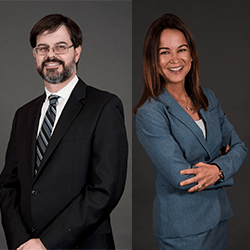
Miriam Figueroa, Managing Partner and Nikos Buxeda, Partner

Miriam Figueroa, Managing Partner and Nikos Buxeda, Partner

1) What do you see as the main points that differentiate DLA Piper from your competitors? DLA Piper is the only full-service international law firm with an office in Puerto Rico.  As a result, we are uniquely positioned to assist US and international businesses with their investments in Puerto Rico, and to assist Puerto Rico-based businesses interested in expanding their business to other jurisdictions. In addition, DLA Piper’s 4,000 attorneys in 90 offices, its investment in information technology and its enormous database of documents give us access to a wealth of knowledge, experience and resources which is unique in Puerto Rico. The great majority of our attorneys have undergraduate or graduate degrees from US universities, and several are New York law qualified and have practiced in New York and other international offices.  The bicultural, bilingual and dual legal system experience of our attorneys is a particular asset for transactions in Latin America under New York law, and for Latin American investors doing business in the United States. DLA Piper is institutionally committed to merit-based hiring and diversity and inclusion.  As a result, 5 of the 8 partners of the Puerto Rico office are women, and several have both local and regional leadership positions. Finally, DLA Piper is also institutionally committed to pro bono initiatives, and in the past several years our office has donated hundreds of thousands of dollars in cash and legal services to multiple pro bono and cultural causes, ranging from education to community projects to the arts.   2) Which practices do you see growing in the next 12 months? What are the drivers behind that? A combination of factors beginning in the mid-1990s resulted in a long recession which began around 2006 and eventually led the Puerto Rico Government to default on its bonds.  This in turn led to a contraction in both private and public construction and infrastructure projects and lack of maintenance of existing infrastructure. This contraction and the crisis in government finances also trickled down to the local economy, unemployment increased, and migration reduced our population.  In response, the U.S. Government approved a quasi-bankruptcy law for the local government and its instrumentalities; and appointed a fiscal board which is responsible for approving Puerto Rico’s budgets and representing Puerto Rico in the quasi-bankruptcy proceedings.  The fiscal board has restructured the Puerto Rico central government debt.  In addition, Hurricane Maria (although devastating in the short term) resulted in the U.S. Government committing many billions of dollars to reconstruction of infrastructure projects (and specifically for upgrades to the electric grid, water systems, housing and roads).  Finally, the end of the COVID pandemic has resulted in a large increase in tourism. Many Puerto Ricans that had migrated are returning to the island. The combination of pent-up demand for housing, the need for upgrades to existing infrastructure (such as ports and roads), federal funds for infrastructure projects, the stabilization of government finances and an increase in tourism has already resulted in multiple residential housing, hotel, marina, road, ports, electric grid, electric generation (including renewables and natural gas projects), and other infrastructure projects, and we expect that trend to continue.  Furthermore, the lack of available capital has made Puerto Rico a leader in public-private partnership projects, and we expect that trend to continue as well.   3) What's the main change you've made in the firm that will benefit clients? The Puerto Rico office opened in 2016 as a tax and corporate boutique.  We have since added litigation and regulatory, environmental and permitting, labor and employment and white collar and corporate investigation practices.  This growth has responded to client demand for a full suite of high-level business law services.  We also continually strive to integrate our office to the broader DLA Piper platform.   4) Is technology changing the way you interact with your clients, and the services you can provide them? The trend to 24-hour availability of legal counsel was sped up by the COVID pandemic.  Our office was fortunate that DLA Piper had made the necessary investments in IT infrastructure and training, so we were able to move to a remote work environment immediately and smoothly.  We have access to our communications and IT systems from our home, from our cars, from anywhere that there is a cell phone signal.  Although this can be beneficial to clients sometimes, it places stress on our human resources and can lead to work product and decision-making that represents client’s request for expeditious advice and less detail. It is a challenge that requires educating the client on the implications of their priorities, but ultimately, it is the client’s decision.  Navigating this new environment is a work in progress for both law firms and their clients. DLA Piper also has a market leading artificial intelligence practice, which includes the development and implementation of AI solutions/applications. This is not only a cutting-edge practice on a global level but something that clearly distinguishes us from other firms doing business in Puerto Rico.  We are already working with big clients in Puerto Rico, implementing remarkable AI solutions to their legal and business needs, not only in English, but in Spanish and across industries.   5) Can you give us a practical example of how you have helped a client to add value to their business? We have clients that, through our geographic network and expertise in practice areas, have been able to expand their businesses outside the island because they have found in us (i) the knowledge and resources to advise them regarding the legal landscape in North and South America, and (ii) the business connections outside of Puerto Rico.  We also identify potential business opportunities in and outside Puerto Rico, both to our local clients and to other DLA clients world-wide regarding opportunities in Puerto Rico. Finally, through our alliance with consulting firms like The Cohen Group, our clients have available intelligence and support with respect to political, economic and strategic needs to navigate the realities in the Region.   6) Are clients looking for stability and strategic direction from their law firms - where do you see the firm in three years’ time? Clients are looking for creative solutions to their problems, responsiveness and high-quality work product.  Stability comes from the ability to meet these standards, not the other way around.  We are confident that we can continue to meet our client’s needs, and as a result our office will be well-positioned in the local market for years to come.
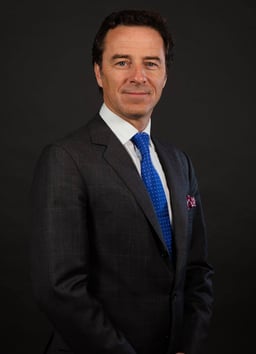
Marcelo Etchebarne, Country Managing Partner

Marcelo Etchebarne, Country Managing Partner

1) What do you see as the main points that differentiate DLA Argentina from your competitors? DLA Piper is the most prominent global law firm today with over 90 offices in more than 45 countries. It has been ranked the number 1 global M&A firm for the 11th consecutive year according to Megamarkets and number 2 in the US. The firm has the muscle to invest in the best available technology. We developed our own artificial intelligence named CoCounsel. Our experts on AI can not only tell clients how to comply with new rules and regulations but also make sure they comply with them. All of that percolates into our team that is better suited to advise clients in a rapidly changing legal environment. Our lawyers participate in practice groups with lawyers from Canada to Chile on regular update calls and training programs. They interact with their peers in Europe, Middle East, and Asia Pacific. They are updated with the cutting-edge legal technology that the firm applies globally. We operate under the protocols and standards of a leading international firm. Put it simply, our Buenos Aires office has a mix of lawyers admitted in Argentina and in New York with a global exposure. The training and experience they receive is unmatched by any other local firm.   2) Which practices do you see growing in the next 12 months? What are the drivers behind that? Mergers and acquisitions in the food, agribusiness, energy, and mining sectors will continue to grow. Argentina was once the barn of the world and still is one of the largest food producers; it has the second largest gas basin in the world, some of the largest mineral deposits (silver, potash, lithium, uranium, copper, gold), it is still one of the largest producers of food. With adequate regulation and some stability, it could easily double or triple it exports on those sectors. We are ready to help global and local clients in those areas. We have been incredibly active in M&A over the last few years. In 2022, our Buenos Aires office consummated 20 aquisitions, 14 of which were publicly reported and 6 remained confidential. That is twice as many as the number reported by the second most active firm. We were also one of the busiest Argentine firms in finance and capital markets in 2022.   3) What's the main change you've made in the firm that will benefit clients? We have top notch practitioners in all the areas that we cover.  We have the ability to retain the best available talent and train them in a way that our peers cannot.  We also have a highly sophisticated group of New York Law practitioners (to my knowledge the only one based in Buenos Aires) that work as part of the teams in New York with Christopher Paci, our US Chair of Capital Markets, Margarita Oliva, our Latin America Regional Practice Group Leader (Finance) and myself. They have done several cross border corporate finance deals under New York Law in Mexico, Peru, Paraguay, Chile, Uruguay.   4) Is technology changing the way you interact with your clients, and the services you can provide them? AI and quantum computers will rapidly transform the world. At DLA Piper we have developed CoCounsel. As said by Bennett Borden, our Chief Data Scientist of our Artificial Intelligence and Data Analytics Practice, with CoCounsel, our attorneys will be able to enhance their services and create more agile and focused workflows by leveraging advanced purpose-built AI technologies.   5) Can you give us a practical example of how you have helped a client to add value to their business? DLA Piper Argentina has historically created novel legal solutions. In 2010 we proposed a reverse inquiry proposal from bondholders holding around USD12 billion of defaulted Argentine sovereign bonds. That idea was key to terminate the stalemate between the Republic and its investors. Our clients obtained the trade they thought was reasonable and the Republic saved US$36 billion, compared to the payments made under court settlements a few years ago. More recently, we advised on five deals of the year in Latin America, including YPF US$6.2 billion debt restructuring, the Province of Buenos Aires US$ 7 billion debt restructuring, LATAM Airlines US$1.3 billion debt restructuring, the Province of Buenos Aires peso-denominated notes offering of US$ 1.5 billion, and Stoneway Capital US$ 500 million offering of senior secured notes in connection with the construction of four combined cycle plants in Buenos Aires. We are currently advising a large group of business leaders on a monetary reform program for Argentine that will be available for implementation for the next administration in 2024. We have a team of lawyers that have contributed over US$150,000 on pro bono legal advice from the U.S., Europe and Argentina, designing a highly complex legal structure to deal with the complexities that the Argentine Central Bank is currently facing. If implemented, this can be a game changer for companies, financial institutions and business leaders operating in Argentina, providing long term stability, growth, and low inflation.   6) Are clients looking for stability and strategic direction from their law firms - where do you see the firm in three years’ time? We are a client oriented global law firm. Our clients are generally very sophisticated, demand attention and high-quality legal advice. Stability and strategic direction are key to them. Our Buenos Aires office was founded in 1998 and some of the founding partners are still around, such as Guillermo Cabanellas and me. Almost all of our partners were trained in-house. Over the past two and a half decades we have worked in some of the most challenging matters that took place in Argentina, from the largest transactions to the biggest arbitrations and complex cross border litigation engagements designing the strategic road map for our clients and taking them to the finish line. We believe that our team has the capabilities to continue leading the trend in the future.
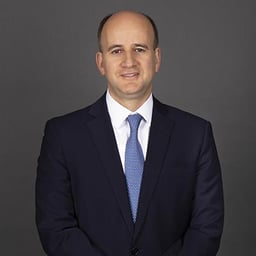
Matías Zegers, Managing Partner (Chile office)

Matías Zegers, Managing Partner (Chile office)

What do you see as the main points that differentiate DLA Piper Chile from your competitors? One of our main differences is that we are part of a global firm since 2017. In essence, this puts us in a position that allows us to assist Chilean companies in their legal needs, not only locally, but in practically all those jurisdictions in which they want to do business, keeping our office as the only counterpart for these purposes. We offer our client to be a one-stop shop in more than 40 jurisdictions allowing us to offer services and fees tailored to each client while still providing continuity in our services, which are always client oriented. Another difference is that we are very committed to our clients, providing them legal advice, but also understanding the sectors in which they operate. As a matter of fact, our groups are organized by practice areas and sectors, as we believe that knowing our clients' business makes the difference in the correct understanding of their needs and allows us to add value to their business decisions and activities. In addition, for each client, we create a customized working team composed of lawyers who understand clients´ commercial needs in both national and international spheres. Finally, we believe we are an innovative firm, doing a permanent effort in analyzing “what” we do and “how” we do it. For example, we were pioneers establishing the first practice group in Chile specialized in Venture Capital, Corporate Governance or renewable energy legal services, and also in using tools like Aiscension, a cartel risk-management tool based in Artificial Intelligence. Which practices do you see growing in the next 12 months? What are the drivers behind that? As consequence of digital transformation, we believe that our practices of Venture Capital, Fintech and Data Protection will keep growing. Technology is an industry closely related with Venture Capital, consequently we believe that such practice will continue expanding in all ranges of companies, from start-ups, fast growing, mid-market businesses to global companies. Chilean entrepreneurship ecosystem has matured during the last years, with several national unicorns, for example. Also, as consequence of such maturity we foresee that starts-up will be demanding more legal advice. Disruptive innovation is occurring across the Fintech industry value chain, in such areas as payments and billing technology, trading and clearing, lending, financial information services, retail and consumer banking, insurance, money transfer and remittance, blockchain, artificial intelligence and robotics technology, banking infrastructure, wealth management, security and investor protection, institutional investment tools, digital currencies, crowd funding, and investment platforms, and this will required innovative and creative legal solutions as those arises from a novel matter. Data protection is other practice that we expect to growth, due to the increase of queries of national and foreign clients as a result of the rising level of data protection legislation worldwide, for example by the California Consumer Privacy Act, the Brazilian and Canadian privacy acts and the GDPR. Even companies that are not directly subject to these regulations want to adapt their policies in many cases to meet the requirements of the regulations, which furthermore share quite a few common elements with the bill of law that aims to adapt the Chilean data protection law. In the energy sector, the context is settled by the government's decarbonization target. During last years we have witnessed the development of non conventional renewable industry in Chile and we believe this development will continue to increase. In relation with energy, we have seen that M&A activity is driven in a relevant portion by energy projects. In addition, there is an increase demand related with green financing and a tendency to establish ESG criteria in companies. Finally, a tax reform bill is currently being discussed in the national Congress, which will cut across all areas of taxation. As we have witnessed in previous tax reforms implemented in the country, this bill and then the law (in case of enactment) will trigger a lot of concerns and questions for companies, specially to understand the effects of the tax reform and the requirements to comply with it. During last years, we have strengthened our tax team adding a partner, Amory Heine, who brings to the team her experience on corporate and personal tax planning, structuring of businesses and companies in Chile and abroad, and audits and litigation with the Internal Revenue Service, before the Tax and Customs Courts, Courts of Appeals and the Supreme Court. In addition, during 2022, we have included to the team a Tax Consultant, Sebastián Camus, who is a Public Accountant and Auditor, contributing with his experience on accounting matters; and also two new associates, Francisco Arguello and Francisca Espinoza. What's the main change you've made in the firm that will benefit clients? There are several changes that we have made lately in the firm that we believe are in the direct benefit of our clients, ranging from financial, operational to strictly legal matters. However, two changes that we would like to highlight is (i) the level of integration among the different offices, to make sure that quality, information and the whole experience for our clients is very high no matter with which office the client is dealing with; and (ii) how we gather information about the client business and strategy, to be sure that we include that knowledge in our advice. Is technology changing the way you interact with your clients, and the services you can provide them? Absolutely, because of the Covid19 pandemic, we increased dramatically our remote meetings with clients or potential clients. Nowadays, we still have this type of meetings, but also in person meetings. Remote ones allow us to be efficient in how we work in certain matters, but in person ones are better in cases when definitions about strategy of in-depth discussions are needed. The major challenges of new technologies and new ways of communicating with clients, is the delivery expected by them when using these kinds of tools. In this regard, we have been working in creating protocols to help the team navigating multiple and simultaneous requirements. Can you give us a practical example of how you have helped a client to add value to their business? There are multiple cases, but one that stands out refers to a company that was involved in a significant financing round. They started the process thinking about just raising money, more concern about the size of the check than in other considerations. Working together, we were able to detect, discuss and solve multiple issues that could have threatened the viability of the company, reaching out an agreement about a structure completely different to the one initially agreed by the parties which, at the end of the day, was more favorable to everybody involved. Are clients looking for stability and strategic direction from their law firms - where do you see the firm in three years’ time? Absolutely. We see more and more clients looking for a real partner providing legal services with global reach, knowledgeable of the market and top-quality in its services. We provide all of that with a single vision, in a one-stop-shop firm that shares the ambitions of our clients and want to join them in their challenges, with the focus of helping our clients to be successful in their strategies and businesses.

Hernán Velarde, Real Estate Partner & Andrea Pinillos

Hernán Velarde, Real Estate Partner & Andrea Pinillos

What do you see as the main points that differentiate DLA Piper Peru in the area of Real Estate from your competitors? I am convinced that the main strength that differentiates us from other real estate practices is that we provide a personalized attention, complete advice and support. We understand real estate law as a cross-cutting discipline and not as a subject outside the other areas of law. In this sense, we are committed to having lawyers specialized in real estate law, but without losing sight of the fact that they should know the law in general and other areas of law related to our area of practice.   Thus, as part of our practice in real estate law, we advise clients in matters such as civil law, building sanitation, registry law and municipal law, among others. In addition, in order to provide a global advice, we also deal with tax, financial, commercial and regulatory matters, but that does not mean that we are not familiar with the application of other legal disciplines, since its interference depend on the specific transaction and how we structure it.   The above is reflected in the scope of our work, from the beginning of our advisory and until the operation is completely closed. It is very important to us that our clients feel accompanied during the whole process and comfortable enough to ask us any questions until they are totally convinced and sure that they can trust us to carry out their deals. What are the drivers behind the growth of this practice area for your firm? We are committed to the constant updating and training of our team. We are always attentive to the new forms of business in which our clients and potential clients may be interested. I believe that this contributes to making our firm attractive to the real estate market. In addition, this adds to our professional experience and quality of work, which also allows our constant growth. What's the main change you've made in the firm that will benefit clients? I believe that the main change we have achieved in the firm is the capacity for analysis and organization that allows us to find the best strategy to carry out a transaction in which our client is interested. On the other hand, there is our experience in property transactions either for commercial or residential projects, as well as lease negotiations that have helped us strengthen our skills and transmit security to our clients to carry out their business and operations. Is technology changing the way you interact with your clients, and the services you can provide them? Yes, we are significantly more connected with our clients. It is much easier to discuss and exchange ideas. We work with numerous clients that are based abroad and thanks to different platforms that we have available today, distance is not an issue whatsoever. Today, distance is no longer a limitation and it is possible to work with companies anywhere in the world. Can you give us a practical example of how you have helped a client to add value to their business? We currently have a wide portfolio of clients dedicated to the real estate business, which in some cases, through our introduction, have been able to interact and develop new businesses together.   For instance, in the last few months we have supported a client owning an important piece of land where he could develop a real estate project by selling that asset (partial cash payment) and in exchange for real estate units of other projects owned by a developer, who is also our client.  This worked well for both because it allowed the seller to obtain a higher value for his assets and the developer to achieve the number of sales requested in order to bank the project.  The expertise and seriousness of both our clients, as well as our references to both, resulted in a new relationship and successful business operation.   Another recent example, is having supported a client who was denied his building license for exceeding the regulatory height, to not only gain back his license, but gain it back with two additional floors to those originally permitted, significantly increasing the area sold for such project. Are clients looking for stability and strategic direction from their law firms - where do you see the firm in three years’ time? Taking advantage of the fact that we are a global firm, we can provide quality advice throughout the region. If our client does business in more than one jurisdiction, we can contact them with our firm's offices in those countries and assure our client of quality and interconnected advice.   In three years, I see the firm as a leader not only in the country, but also regionally. Our team has grown meaningfully and we estimate that it will continue to grow. We are committed to young talent, care about having the best qualified professionals, and that people grow together with us. What is the future for Real Estate work in Peru? Where do you envisage changes and developments in the area in the upcoming years? Real estate has been growing exponentially and obtaining a wider place in the market; a clear example of this is Lima and the amount of multifamily and commercial buildings that this city currently has. Along with this is the high need for citizens' housing and the need for new business workspaces. Since much of our work relies on advising on transactions of purchase and sale of real estate, forms of financing, as well as advice for the development of real estate projects, and taking into account the high demand to which I mentioned above, I consider that there is a great expectation regarding the work of real estate in upcoming years.   Furthermore, taking into account the new trends in the real estate sector in our country, I believe that there will be even more development related to hotels and coworking spaces. To date, there are a variety of hotel projects, as well as companies that have seen great potential in the coworking business given the increase in small businesses, as well as independent professionals who find a shared workspace more attractive. Senior citizens care centers and multy family renting projects will also relevant on the near future. One of our purposes is to advise companies interested in developing these fields. How large is the team in this area? How would you describe the team and it’s approach to clients? Our team is made up of one partner and four talented female associates. The inclusion of women in roles within the legal profession is extremely important to our firm as a whole.  We have a solid working environment and a fairly high analytical capacity, which gives our clients confidence and security.
Content supplied by DLA Piper