
Market Overview
Jordan
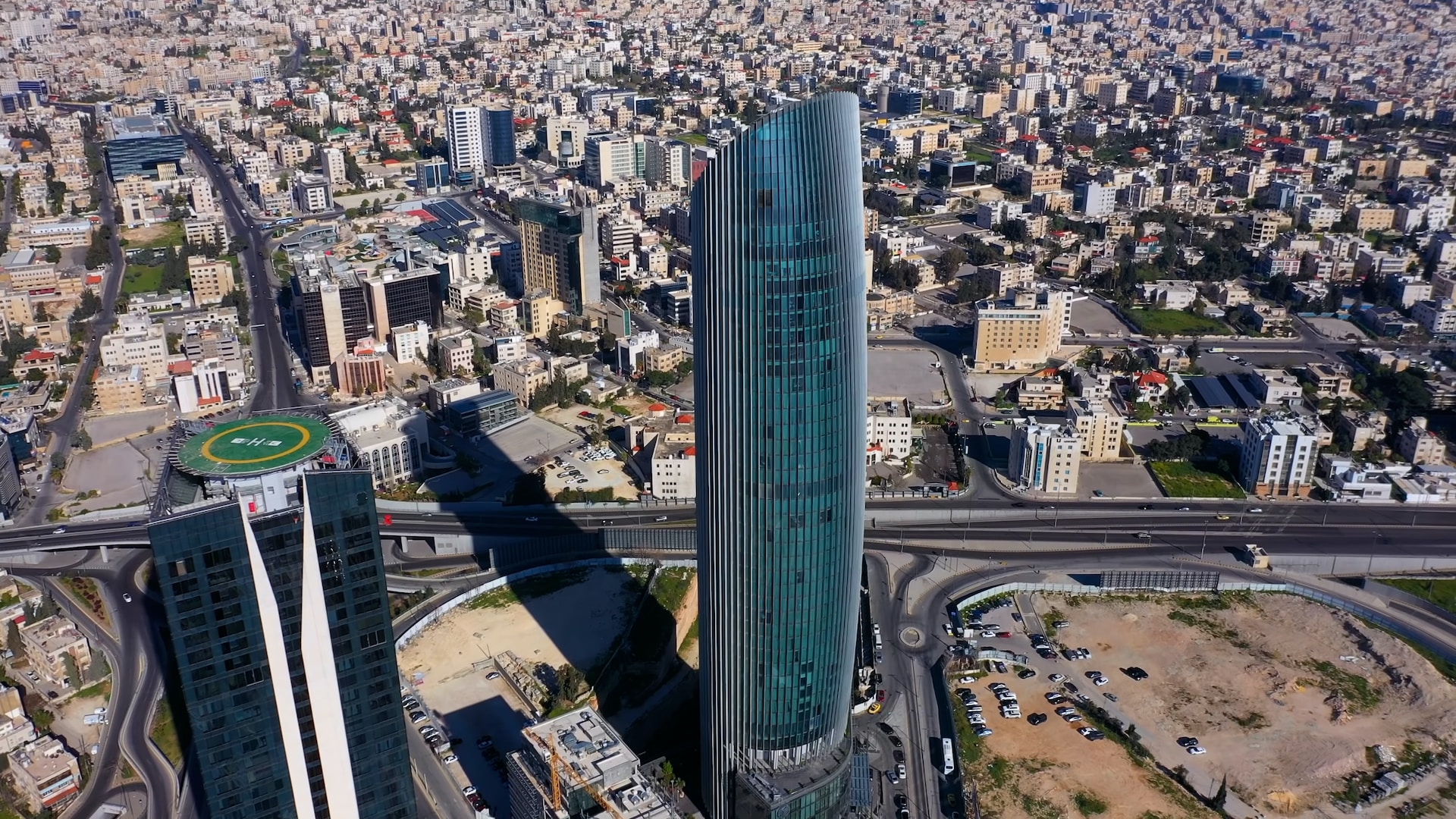
Business environment is referred to as a collection of all internal and external factors that influence business activities. Each factor contributes to organisation’s working environment; hence, impact the ways of conducting business. Below are the key factors that influence new and existing businesses in Jordan.
Intro: Why Jordan?
Doing business in Jordan presents many opportunities for existing and new businesses. Key benefits and advantages of investing in Jordan are delineated below:
Jordan’s Position in Global Businesses Indexes
Jordan was ranked 75 out of 190 countries in the Ease of Doing Business index by the World Bank. This ranking secured a top position for Jordan in the MENA region and among top 10 countries worldwide with regards to business opportunities and improvement. Furthermore, the World Economic Forums ranked Jordan at 70th position out of 141 economies in Global Competitiveness Report 2019 index. Jordanian market secured 35th ranking in intellectual property protection index, 37th in legal framework adaptability to digital business model, 31st in manifestation of digital skills among the active population and 24th in finding skilled employees. The position of Jordan and its market in global business indexes clearly indicates that there are several key opportunities available for new and existing businesses to accelerate success. Under these ranking, Jordan has secured a strong position in the global market in terms of sustainable business. To seize opportunities for successful implementation of businesses, organisations should capitalise on sustainability, digitalisation, and skills. These are active agent of change on which Jordanian government is focusing to expand across different business sectors.
Moreover, Jordan implemented a unified legal structure to improve legal rights of borrowers and lenders. The country improved access of credit bureau to credit information by providing credit scores to banks, borrowers, and financial institutions. As a result, Jordan market secured 95 ranking on 100 in Doing Business category related to the ease of accessing credit. These reforms created an effective business environment; since it cut red tape to stimulate business sectors grow and improve competitiveness. These two attributes make Jordan market a more attractive business destination for investors.
Economic Considerations
When starting a new business in Jordan a prudent investor is advised to properly understand the plethora of matters to easy comprehend the factors that may influence business activities. Potential investors are provided with detailed explanation regarding economic progress, business environment, legal systems and specific investment opportunities. It is significant to plan businesses activities around these factors to ensure successful implementation of business in Jordan.
Economic Progress
Economic progress is directly linked with a successful implementation and stability of a business. Economic growth is the result of increase in the value of country’s goods and services. This creates more opportunities for a business to generate profits. The economic progress of Jordan is evaluated by analysing its key economic indicators and banking and financial services.
Key Economic Indicators
Jordan is expected to witness economic growth by 2027. The GDP rate of Jordan is projected to increase from 2022 to 2027 by 15.6 billion USD, which means a growth rate of more than 32.45 per cent. Faster growth in GDP entails that the overall size of the Jordan’s economy will be expanded, provide an opportunity for organisations to generate profits in different business sectors. High GDP growth rate leads to technological breakthroughs that increase confidence of firms to adapt to innovative and modern methods of doing businesses.
The economy of Jordan is segmented into three sectors: Agriculture sector, Industry sector and Services sector. Major contribution to GDP is made by services sectors as in comparison to industry sector and agriculture sector. In 2021, services sector contributed around 61.05 per cent to GDP; whereas 23.7 per cent was contributed by industry sector and 4.74 per cent came from agriculture sector. These statistics clearly indicates that businesses operating in services sector are experiencing high competition. Furthermore, industry and agriculture sector have great hidden potential that new investors can unveil.
Furthermore, the average inflation rate of Jordan is projected to continuously decrease between 2020 and 2027. In 2022, inflation rate in the country was 3.8 per cent; however, in 2027 it is expected to reach 2.49 per cent. Continuous decrease of inflation rate delineates the fact that in Jordan, exports values are expected to get increased since the prices are lower. Furthermore, businesses can take advantage of low inflation to maintain real income and purchasing power to the employees. In this regard, it can be pinpointed that low inflation rate is maintained in Jordan to open different business sectors for potential investors.
Banking and Financial Services
Jordan has a well-developed banking and financial sector by regional standards. It includes a wide array of business, retail services and investment. Both local and international banks are operating in Jordan. The country has around 25 banks; 16 Jordanian banks out of 3 are following Islamic banking and 9 are non-Jordanian banks.
The Amman Stock Exchange is established to manifest modern financial services. This institution enjoys no capital gains, no taxes on cash dividends, no taxes, free repatriation of income and investment, no foreign equity ownership and privatization. Moreover, it follows a comprehensive legal infrastructure to comply with internationally recognised financial environment that makes a well-established stock market. As a result, investment is bankable and allows investors to grow their profits. In the last few years, Jordan has incurred a positive growth due to investment inflows and unprecedented performance of banks with regards to deposits, credit facilities and operating revenues. High investment portfolios have generated high revenues that led an overall expansion of Jordan’s economy. Since banks and financial services are managed by using solid financial fundaments, the credit outlook for Jordanian institutions is stable.
Legal System
Different countries have different legal system that allows businesses to operate in a specific market. It includes rules, polices, procedures and institutions applying which public and private organisation carry out their business activities in a legitimate way.
International Trade Agreements: A series of business reforms has been introduced to leverage the capacity of doing business in the local market of the country. The Jordanian government entered into a wide range of bilateral and multilateral trade agreements to give businesses with the ability to gain access to more than one billion customers. The country is focusing on trade liberalisation to manage major economic and financial crisis. International trade agreements are made reduce the barriers that could impede the flow of goods and services. The reduction and elimination of trade tariff does not only support local businesses, but also encourage foreign investment. Following are the bilateral and multilateral trade agreements that Jordan has made with other countries:
Labour Legislation: Labour legislation aims to facilitate the efficient utilisation of labour, which is the driving force of successful business. The Jordanian Labour Law preserves labour rights for employees to establish a positive business environment in the country. The Legal working hours in Jordan is maximum forty-eight during six days.
Tax Laws: Jordan has amended the income tax law that impacts a wide range of tax aspects applied to corporations and individuals. In development zone, 5 per cent income tax is applied on manufacturing companies. Other companies registered in this zone shall be taxed at 10 per cent. Following changes are applied on individual, and corporates:
Figure: Key summary of income tax changes
Individuals’ Income Tax Exemption
Details
Exemptions (JOD)
2019
2020 onwards
Personal Exemptions
10,000
9,000
Dependents Exemption
10,000
9,000
Additional exemptions for medical expenses, educational expenses rent and home loan interest
1,000 for each child up to 3,000
1,000 for the individual, 1,000 for the spouse, and 1,000 for each child up to 3,000
Individuals’ Income Progressive Tax Rates
Taxable Income (JD)
Rate
0 – 5,000
5%
5,001 – 10,000
10%
10,001 – 15,000
15%
15,001 – 20,000
20%
20,001 – 1,000,000
25%
1,000,000 +
30%
Industrial Sector
Tax Year
Industrial, Pharmaceutical and Clothing
All Other Industrial Activities
National Contribution
Tax Rate
Tax Rate
Rate
2019
10%
15%
1%
2020
14%
16%
1%
2021
16%
17%
1%
2022
18%
18%
1%
2023
19%
19%
1%
2024
20%
20%
1%
Other Sectors
Sector
Tax Rate
National Contribution
Banking
35%
3%
Electricity generation
24%
3%
Basic mining companies
24%
7%
Finance, financial intermediary, and financial leasing
24%
4%
Telecommunication
24%
2%
Insurance and reinsurance
24%
2%
Other sectors
20%
1%
Foreign Investment Legislation: Recently, the Government of Jordan focused on reforms, including regulatory and procedural reforms as well implementing investment policies to enhance the investment environment in specific relating foreign investments. However, some sectors which are considered related to national security, public order, public morals, and public health are prohibited for non-Jordanian investors. While other sectors are restricted and requires a Jordanian partner to invest in for economic and political reasons. Notwithstanding the afore mentioned, special exceptions may be granted depending on the importance and location of the investment by the cabinet and investments in development zones and free zones can be wholly owned by foreign investors.
Environmental law: Jordan has made it obligatory upon business entities to consider environmental decision carefully to design a sustainable development strategy. In this regard, it can be observed that Jordan is a water scars country; its water resources depend on rainfall. The country is committed to maintain the quality of water that is affected by industrial and agricultural waste. Moreover, as per the UNDP (2021), Jordan is encouraging businesses to contribute to the reduction of greenhouse gas emissions. The country is committed to reduce greenhouse gas emissions up to 31 per cent by 2030.
Development Zones: In order to foster economic development particularly in industrial sector, the government of Jordan has divided market geographics into two segments including: development zones and special economic zones. These segments are overseen by companies to regulate investments. The following snapshot of key investments in the development zones clearly indicates specific areas of Jordan business sectors in which potential investors can invests.
Figure: Key investments in the development Zones
Jordan Development Area
(Ajloun, Dead Sea)
Tourism, Eco-Tourism and Hotel Services
King Hussein Bin Talal Development Area – Al Mafraq
Industrial Sector, Logistics Sector, Housing and Trade Services
Irbid Development Area
Information Technology and Health Care Services
King Hussein Business Park, Amman
Specialised Services, Medical and Health Care Services, Education, Media, and Entertainment Services
Ma’an Development Area
Light, Medium and Heavy Industries, Ceramics, Plastics and Electronic Equipment
Figure: Industrial cities and future projects
Existing Industrial Cities
Abdallah II Bin Al Hussein Industrial City / Amman
Al Hasan Industrial City / Irbid
Al Hussein Bin Abdullah II Industrial City / Al Karak
Al Aqaba International; Industrial City
Al Muwaqqar Industrial City
Future Projects
Al Mafraq Industrial City / Al Mafraq
Al Zarqa’a Industrial City
Madaba Industrial City
Al Sal Industrial City
Investment Opportunities & Future Prospects
Following are the key sectors that can be explored by new and existing business entities:
Conclusion
From the above analysis, it can be concluded that Jordan offers efficient and stable business opportunities to potential investors. It has secured a prominent position in international, and regional arena. The country has established adequate economic progress, business environment, legal system, and specific investment opportunities. The above provide relevant information that new and existing organisations can use to ensure successful implementation of their business. Key statistics and graphical representation are included to provide better understanding of the subject. The aforementioned information can be used to make informed decisions regarding business initiatives in the state of Jordan.
Global is a leading full service regional law firm in the Middle East with offices in the UAE (Dubai, Abu Dhabi & Ras Al Khaimah), Oman (Muscat) and Jordan (Amman). We service clients cross all geographic locations we operate within and within all practice areas and business sectors we specialize in. Our Jordan office services clients wishing to do business in Jordan and supports their operations and investments.
For any queries, please contact us at [email protected]