


Share on LinkedInShare on LinkedIn

ARTICLE · 08 FEBRUARY 2016

Obviousness In Inter Partes Review Proceedings

Jones Day
Jones Day
Contributor
Jones Day

Jones Day

Jones Day is a global law firm with more than 2,400 lawyers in 40 offices across five continents....

View firm profile
Explore more from Jones Day

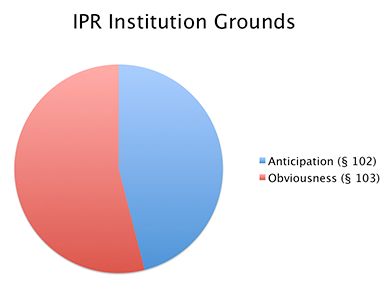
Apparently the Patent Trial and Appeal Board loves obviousness. In 2015, nearly two-thirds of claims instituted for inter partes review were based on obviousness grounds, as illustrated in Chart 1.

United StatesIntellectual Property

Apparently the Patent Trial and Appeal Board ("PTAB", "the Board") loves obviousness. In 2015, nearly two-thirds of claims instituted for inter partes review ("IPR") were based on obviousness grounds,1 as illustrated in Chart 1.

Chart 1

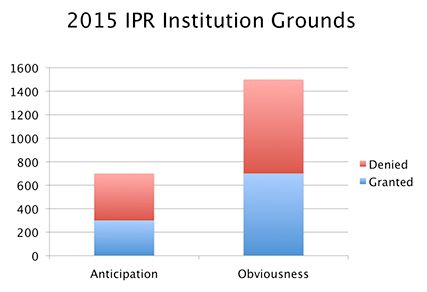
While an IPR petition may be based on either anticipation or obviousness, 35 U.S.C. § 311(b), petitioners pursue obviousness at a much higher rate. And, the institution rate for claims based on grounds of anticipation (46 percent) is lower compared to obviousness (54 percent), as shown in Chart 2. This is unlike district court patent litigation, where a finding of obviousness occurs infrequently.

Chart 2

Although the principles of obviousness are the same as in district court litigation, it is instructive to examine their application by the PTAB given the volume of cases decided in the past three years since inception of IPR under the America Invents Act. Two critical lessons emerge from this analysis:

We operate a free-to-view policy, asking only that you register in order to read all of our content. Please login or register to view the rest of this article.

See more popular content from