Share on LinkedInShare on LinkedIn

ARTICLE · 11 JULY 2017

Lululemon Yoga Mat Configuration Lacks Acquired Distinctiveness, Says TTAB

Wolf Greenfield & Sacks
Contributor
Wolf Greenfield & Sacks

Wolf Greenfield & Sacks

Wolf, Greenfield is one of the 10 largest law firms in the United States devoted exclusively to...

View firm profile
Explore more from Wolf Greenfield & Sacks

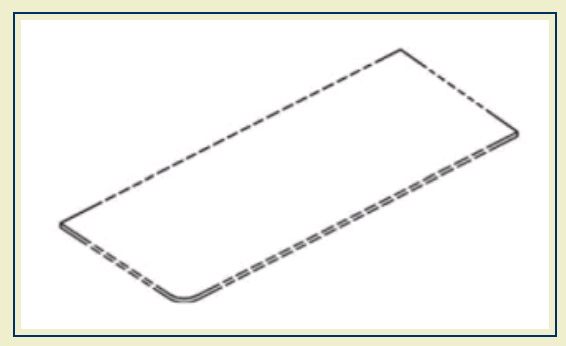
The TTAB affirmed a refusal to register the product configuration shown below, for "yoga mats," the purported mark being described as "a three-dimensional configuration of a rectangular-shaped yoga mat...

United StatesIntellectual Property

The TTAB affirmed a refusal to register the product configuration shown below, for "yoga mats," the purported mark being described as "a three-dimensional configuration of a rectangular-shaped yoga mat having one corner being curved and the remaining three corners being right angles." The Board agreed with Examining Attorney Samantha Sherman that Lululemon's proof of acquired distinctiveness was insufficient. In re Lululemon Athletica Canada Inc., Serial No. 86718537 (June 22, 2017) [not precedential] (Opinion by Judge Bergsman).

As we all know (See WalMart v. Samara), a product configuration cannot be an inherently distinctive trademark. The applicant for registration must establish acquired distinctiveness under Section 2(f). The Board observed that [t]here is no fixed rule for the amount of proof necessary to demonstrate acquired distinctiveness; however, the burden is heavier for product configurations." Proving acquired distinctiveness for a product design

We operate a free-to-view policy, asking only that you register in order to read all of our content. Please login or register to view the rest of this article.

See more popular content from