TRAction’s reporting services include data validation and enrichment, ensuring any errors identified are resolved and data meets the format requirements prior to ARM submission. This article applies to both EU and UK MiFIR.
We have identified the 4 most common errors in the transaction data we receive from our clients.
1. Missing customer details
This is the most common type of MiFIR error. The exact error messages for this type of error can differ depending on the fields concerned.
There are many fields required to be populated for client details. Below are some errors that are most prevalent in relation to missing customer details.
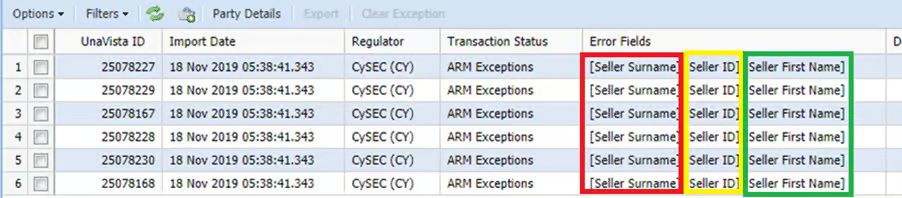
What went wrong?
We get these exceptions because some, or all, of the customer details for these transactions are either missing in our client’s database or are not in their client file (if they send one). Special symbols or spaces can also trigger an error, as these cannot be recognised by the LSEG platform (the Approved Reporting Mechanism