
The Full Federal Court in August 2004 gave its appeal decision in the trade mark fight between Crazy John's and Crazy Ron's, two unrelated chains selling mobile phones. Its decision provides a good illustration of the limits to which a particular trade mark registration can be enforced, and why frequently more than one trade mark registration will be needed to properly protect a business's trade insignia.
In 1995 the Crazy John group of businesses registered the following trade mark for telecommunication services:
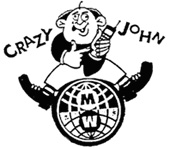
At the trial the judge held that the use of the words Crazy Ron's was an infringement of the above trade mark registration. On appeal, the Full Federal Court overturned that decision.
The reason was that, while the Court accepted that the words Crazy John and Crazy Ron's were very similar, it found that the words Crazy John were not a significant enough component of the above trade mark registration. To enforce the trade mark registration against Crazy Ron's, the trade mark owner had to prove that the impression created by the above trade mark as a whole was sufficiently similar to the words Crazy Ron's.
Things were different, however, in relation to the trade mark registration that had been subsequently registered in 1999, which was for a stylised version of the words Crazy John's:
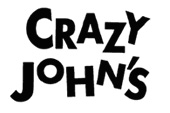
The Court agreed that this mark was sufficiently similar to the words Crazy Ron's and that there was therefore an infringement (except that, for somewhat technical reasons relating to how this trade mark had been applied for, the Court found that it was invalidly registered and ordered that it be removed from the Register).
The Federal Court also considered arguments relating to allegations of misleading and deceptive conduct and passing off, and injunctions were ordered based upon these grounds.
Where available, however, valid trade mark registration rights are generally easier and cheaper to enforce against a competitor.
The main lesson from this case is that it shows the importance of seeking trade mark registrations in a strategic manner. The first trade mark registration would be likely to be effective at stopping competitors from using a logo featuring a maniacal man seated on a ball or a globe, or a logo with a close overall impression, but was not effective at creating a trade mark monopoly on the words Crazy John's alone. The second trade mark registration provides much stronger protection for the words used, but of course provides no protection in relation to the maniacal man logo.
The content of this article is intended to provide a general guide to the subject matter. Specialist advice should be sought about your specific circumstances.





