
Interview with…
Av. Dr. Arzu ONGUR, Ph.D. , Managing Partner
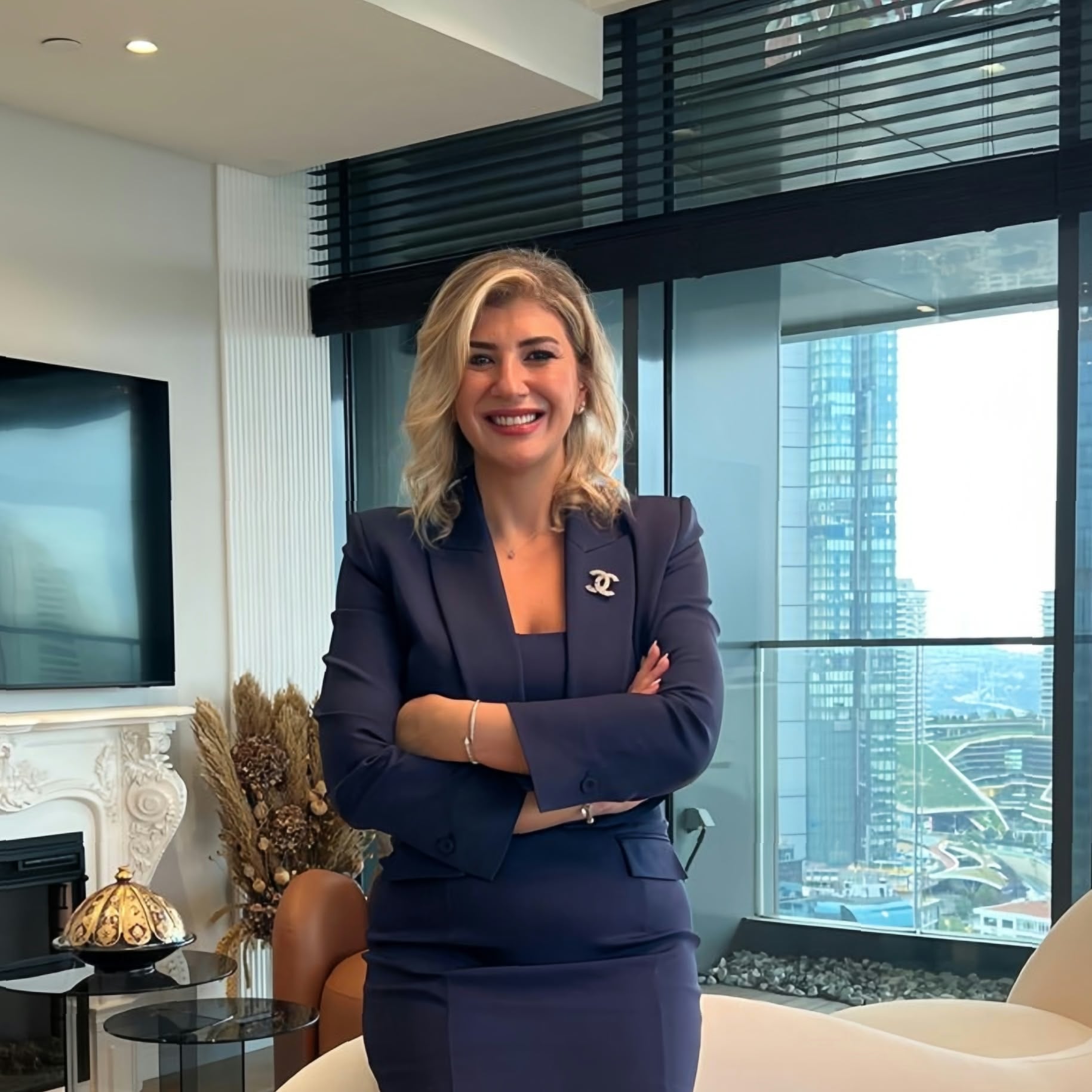
INTERVIEW WITH "Av. Dr. Arzu ONGUR, Ph.D."
1) What do you see as the main points that differentiate ONGUR & Partners from your competitors?
Our principal distinction is our ability to operate confidently in two worlds at the same time: we understand the expectations of international clients, while also having a deep and practical command of the Turkish legal, regulatory and institutional environment over 20 years.
We are accustomed to working with multinational companies, foreign investors, embassies, diplomatic missions, ministries, public institutions and international organisations. As a result, we understand not only the legal questions these clients face, but also the standards they expect from their counsel: clarity, responsiveness, confidentiality, commercial awareness, predictability and senior-level accountability.
At the same time, we know Türkiye from the inside. We understand how courts, ministries, regulators and administrative authorities operate in practice and how legal, regulatory and institutional considerations interact. This enables us to represent clients at the highest professional level before courts, arbitral tribunals, ministries, regulatory bodies and other public authorities, depending on the nature of the matter.
For international clients, this combination is particularly important. They do not need one adviser to understand their expectations and another to navigate the Turkish system. We are structured to do both.
Another important distinction is our strong academic and strategic background. My doctoral work in competition law has shaped the way I approach complex commercial matters: not simply by asking what the law says, but by considering market structure, commercial incentives, regulatory risk and the wider business consequences of a legal decision.
We also have particular strength in Italy–Türkiye matters. Our longstanding experience with Italian businesses and institutions, together with our ability to work directly in Italian, allows us to act as a genuine legal bridge between the two countries.
My involvement at board level within the Italian Chamber of Commerce and Industry community in Türkiye gives me an additional opportunity to observe the relationship between the two markets from close range. It provides valuable insight into sector-specific needs, investment trends, the concerns of businesses operating across the two jurisdictions and the practical challenges faced by companies entering a new market.
This perspective allows us not only to understand Italian clients from a linguistic and legal standpoint, but also to understand their business culture, expectations and commercial priorities.
Our cross-border experience also extends beyond the private sector. Representing Turkish public authorities and ministries in proceedings before Italian courts, for example, requires the ability to operate across different legal systems, institutional cultures and procedural expectations. Such mandates reinforce an important aspect of our practice: effective international representation is not simply a matter of knowing two sets of laws; it requires the ability to bridge different legal cultures.
Finally, clients have direct access to senior lawyers. Even on complex mandates, our partners remain actively involved in strategy and critical decisions.
Our strength lies in being able to understand international clients on their own terms and represent them within the Turkish legal and institutional system with the experience, judgment and credibility expected at the highest level.
2) Which practices do you see growing in the next 12 months? What are the drivers behind that?
We expect particularly strong growth in cross-border investment, dispute resolution and international arbitration, mediation, competition and regulatory matters, corporate transactions and investment-related real estate work.
Türkiye continues to occupy an important strategic position between Europe, the Middle East, Central Asia and the wider Mediterranean region. International companies increasingly see the country not only as a domestic market, but also as a manufacturing, logistics, energy, investment and regional management hub.
At the same time, international investors are becoming more sophisticated in the way they approach Türkiye. They increasingly expect thorough legal and regulatory due diligence before committing capital, as well as reliable guidance on corporate structures, regulatory exposure, investment protection and dispute mechanisms.
We are also seeing a fundamental change in the way sophisticated clients approach disputes.
Clients increasingly want to avoid being drawn into lengthy, expensive and commercially disruptive proceedings where a more focused solution may be available. This is one of the reasons why mediation and arbitration have become such an important part of our practice.
Our approach is not to litigate for the sake of litigation. We first seek to understand the client's real commercial objective and then determine which mechanism is most likely to achieve it efficiently, whether through negotiation, mediation, arbitration or, where necessary, court proceedings.
For many corporate clients, a successful legal strategy is not the one that produces the longest judgment. It is the one that produces a clear, enforceable and commercially sensible result within the appropriate timeframe.
Competition law and regulatory issues will also continue to grow in importance as businesses operate in increasingly complex and regulated markets.
We also expect further growth in Italy–Türkiye trade and investment-related work. The commercial relationship between the two countries is strong, and our direct engagement with the Italian business community gives us a close view of evolving sectoral needs and investment priorities.
3) What's the main change you've made in the firm that will benefit clients?
The most important development has been the evolution of the firm from a traditional legal-services model into a partner-led strategic advisory and dispute-resolution structure.
Our aim is not simply to answer legal questions after they arise. We want to understand what the client is trying to achieve commercially, identify potential legal and regulatory obstacles at an early stage and build a strategy around that objective.
We have also strengthened the way we coordinate our capabilities in Ankara and Istanbul.
Our Ankara presence gives us long-standing experience with ministries, regulators, administrative authorities and public institutions, while Istanbul places us at the centre of Türkiye's corporate, financial and international business community.
This combination is particularly valuable for foreign clients because major projects in Türkiye often require both commercial and institutional capability.
The same client may require strategic engagement with a ministry or regulator, negotiations with a commercial counterparty, mediation of a complex commercial disagreement and, if necessary, robust representation before a court or arbitral tribunal.
We are organised to manage these different dimensions as part of one coordinated legal strategy, rather than treating each issue in isolation.
Another important development has been our increasing emphasis on early dispute assessment. In our experience, identifying the real commercial interests of the parties at the beginning of a dispute can sometimes save years of litigation.
Our objective is for clients to see us not merely as external lawyers, but as trusted Turkish lawyers who understand their organisation, their industry and their long-term objectives in Türkiye.
4) Is technology changing the way you interact with your clients, and the services you can provide them?
Absolutely, and we view technology as an important tool for improving efficiency, communication and transparency.
We use technology in matter management, legal research, document review, knowledge management, deadline monitoring, internal collaboration and client reporting. This is particularly useful for international clients managing Turkish matters from another jurisdiction, because it allows them to follow developments more efficiently and receive structured information from our team.
Artificial intelligence is also changing the legal profession rapidly. We see significant potential in AI-assisted research, document analysis and knowledge management.
However, we are equally clear about its limits.
In complex transactions, disputes, regulatory matters and negotiations, legal advice requires context, judgment, experience and professional responsibility. Technology can process information quickly, but it cannot replace the lawyer's ability to understand different business cultures, read a negotiation environment or assess the institutional implications of a particular strategy.
This is especially relevant in cross-border matters, where a legally correct solution may still fail if cultural, commercial or institutional differences are ignored.
For that reason, every substantive conclusion and strategic recommendation remains under the supervision and responsibility of qualified lawyers.
Our approach is therefore to combine the efficiency of technology with the judgment, confidentiality and accountability of experienced counsel.
5) Can you give us a practical example of how you have helped a client to add value to their business?
One example involved a complex commercial dispute involving Italian, Indian and Turkish parties.
The dispute was not difficult merely because of the legal issues involved. The parties came from different jurisdictions, different business cultures and very different approaches to negotiation and dispute resolution.
In such circumstances, insisting immediately on an adversarial process can sometimes deepen the disagreement rather than resolve it.
Our role was to understand not only the legal positions of the parties, but also their underlying commercial concerns and the cultural differences affecting the negotiations.
Through a mediation-oriented approach, we were able to help bring the parties around the same table, identify areas of common commercial interest and create the conditions for a practical resolution.
For me, this is an important example of what international dispute resolution should achieve.
The lawyer's role is not always to make the dispute more complex. Sometimes the real skill is to reduce complexity, restore communication and identify the point at which apparently conflicting interests can converge.
Our experience in mediation and arbitration is particularly valuable in this respect. It allows us to assess whether a client truly needs a lengthy judicial process or whether its commercial objective can be achieved more quickly and effectively through an alternative dispute-resolution mechanism.
More broadly, when we advise international businesses entering or operating in Türkiye, we frequently coordinate corporate structuring, regulatory approvals, contractual risk allocation, competition-law considerations, investment protection and dispute mechanisms as part of one integrated strategy.
That is how we define legal added value: not simply providing a technically correct legal answer, but helping the client reach a clearer, faster and commercially more effective solution.
6) Are clients looking for stability and strategic direction from their law firms - where do you see the firm in three years’ time?
Very much so.
In an increasingly complex international environment, sophisticated clients are not simply looking for lawyers who can interpret legislation. They are looking for stable advisers who understand their business, anticipate developments and are prepared to take responsibility for strategic legal guidance.
This is particularly important for international companies operating in a jurisdiction different from their own.
When a multinational company, foreign investor, embassy, ministry or international institution requires assistance in Türkiye, confidence in local counsel is fundamental. The client needs to know that its lawyers understand international expectations while also having the experience and credibility necessary to navigate the Turkish legal, judicial and institutional environment.
Our role is therefore not limited to explaining Turkish law.
We aim to understand the client's commercial objective, anticipate regulatory and institutional implications and represent the client at the appropriate level, whether before a counterparty, a regulator, a ministry, an arbitral tribunal or a court.
Our experience also demonstrates that the same level of cross-cultural understanding is necessary when the direction is reversed. Representing Turkish institutions in foreign jurisdictions, including before Italian courts, requires the ability to explain one legal and institutional culture within another. This type of work has further strengthened our ability to manage multi-jurisdictional and multicultural legal processes.
Over the next three years, our objective is to further strengthen ONGUR & PARTNERS as a highly trusted independent Turkish law firm for complex cross-border matters, particularly in dispute resolution and arbitration, mediation, competition and regulatory law, corporate and investment matters and strategic projects involving international businesses and institutions.
We also intend to deepen our position as a legal bridge between Italy and Türkiye, supported not only by linguistic and legal capability but also by our close engagement with the business communities operating between the two countries.
Growth for us does not simply mean becoming larger. It means continuing to strengthen the quality of our lawyers, investing in specialist expertise and technology, expanding our international capabilities and developing long-term institutional relationships with our clients.
Ultimately, we want to be the Turkish counsel that an international client can call before making an important decision, not only after a legal problem has arisen.
Our ambition is simple: when an international company or institution faces an important investment, transaction, regulatory issue or dispute in Türkiye, we want ONGUR & PARTNERS to be among the first firms they consider calling.
Av. Dr. Arzu ONGUR, Ph.D.
Managing Partner
ONGUR & PARTNERS