
Interview with…
Rafik Oreh Walid Ghraizi, Managing Partner
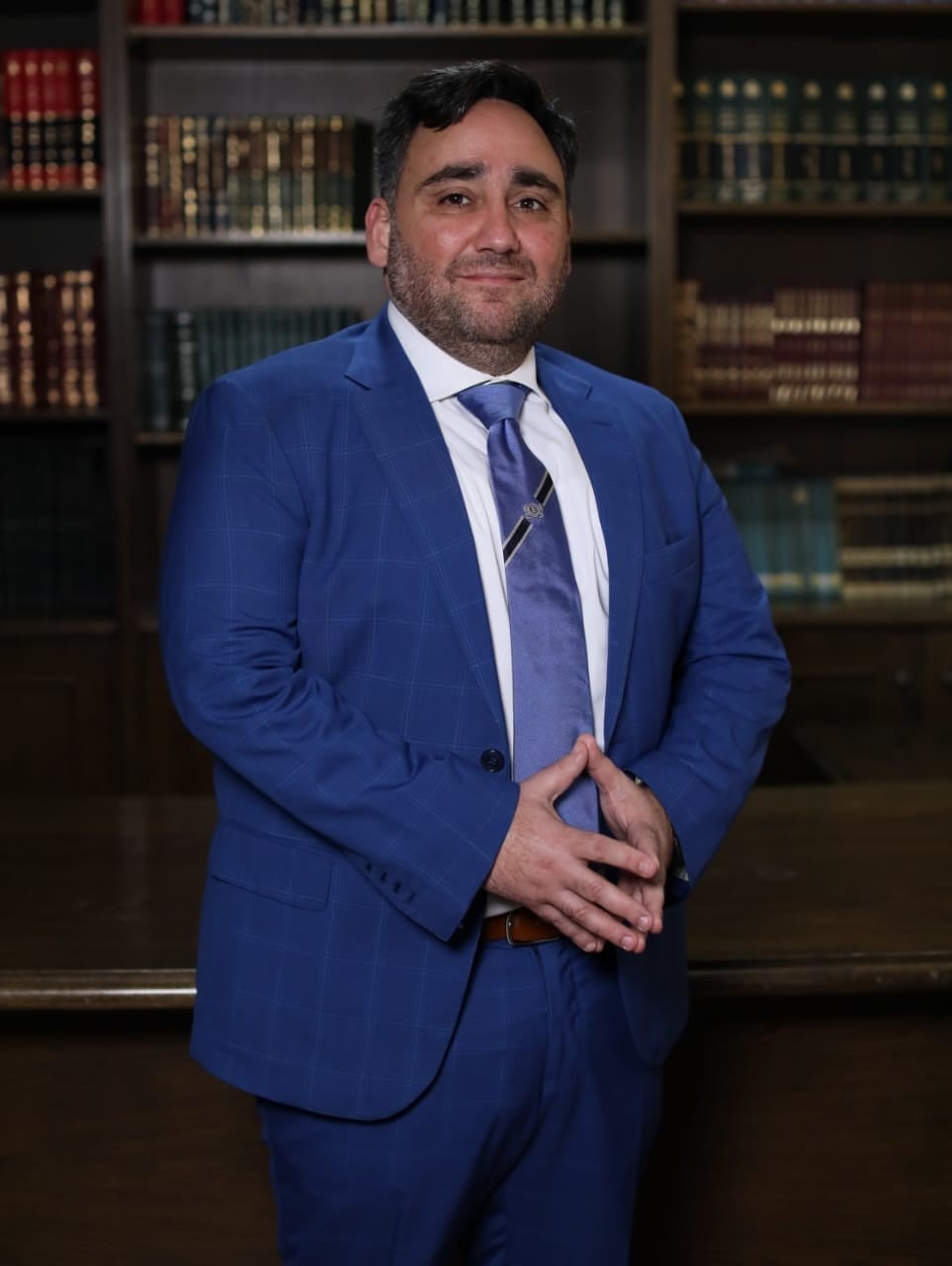
Managing Partner Rafik Ghraizi discusses how Middle East & Partners is engineering innovative "cross-border legal canopies" to protect clients in a rapidly digitalizing global economy, and pioneering the modernization of regional legal frameworks, bridging the gap between local legislation and international corporate and tax standards through digital transformation.
Our firm is defined by a philosophy of "Legal Engineering"—an approach that combines the analytical precision of a scholar with the high-stakes execution of a seasoned practitioner. Unlike traditional practices, we operate as a strategic consortium, providing a unified legal canopy across the Middle East, including, the UAE, Lebanon, Qatar and Egypt. We bridge the gap between the boardroom and the courtroom by translating complex legal risks into clear commercial pathways for C-suite executives.
Beyond advisory, our core strength lies in our active role in evolving the regional legal landscape. We don’t just interpret the law; we help shape it. Through our collaborations with the International Chamber of Commerce (ICC) Qatar and the Qatar Chamber, we advocate for the alignment of local regulations—specifically in digital trade and electronic records (MLETR)—with international benchmarks. This "insider’s perspective" on legislative intent provides our corporate clients with a level of strategic foresight that standard firms cannot replicate.
Finally, we operate at the unique intersection of diplomacy, commerce, and digitalization. Through our strategic partnership with the KON Group, we integrate elite legal services with business management and cultural consultancy. Our deep-rooted engagement with the diplomatic community and foreign embassies further provides us with a global perspective that we apply to local legislative challenges. We don’t just practice law; we build the cross-cultural and international legal bridges essential for success in today’s borderless economy.
We anticipate significant growth in in ESG (Environmental, Social, and Governance) compliance, Digital Infrastructure/Fintech, International Taxation and Digital Trade Law, driven by Qatar’s rapid integration into the global regulatory ecosystem.
The drivers are twofold: tightening global sustainability regulations and the rapid institutional adoption of AI and block chain technologies, both of which require robust new legal frameworks.
A primary catalyst is the implementation of Law No. 22 of 2024, which introduced the OECD Pillar Two framework (including the Domestic Minimum Top-Up Tax) as of January 1, 2025. This historic shift toward a 15% global minimum tax for large multinational enterprises requires expert legal guidance to harmonize local corporate compliance with international tax transparency standards.
Parallel to this, we see a surge in Digital Infrastructure and Fintech. Qatar’s transition to Stage 6 on the global MLETR adoption tracker and the launch of the QFC Digital Assets Framework 2024 are creating an urgent need for legal frameworks that recognize electronic transferable records and blockchain-secured assets. These advancements, coupled with the rapid adoption of AI, demand "robust legal rails" that ensure cross-border digital transactions remain secure and legally enforceable.
Finally, we are entering a "Golden Age" for International Arbitration. As regional economies restructure to meet ESG benchmarks and international transparency standards, the need for institutionalized dispute resolution has never been higher. We expect to see a rise in complex Corporate Governance and ESG compliance disputes as firms modernize their structures to attract global investment. These converging trends make a specialized, future-proofed legal partner essential for any entity operating within or through the MENA region.
The most significant evolution at our firm has been the transition to a Consortium Model that integrates elite legal expertise with diplomatic and corporate consultancy. By moving away from the traditional billable-hour structure toward Value-Based Pricing for several key departments, we provide our clients with absolute cost predictability while ensuring our incentives are directly aligned with the efficient and successful resolution of their matters.
Central to this new model is the establishment of our Legislative Advisory & Promotion Unit. This specialized team is dedicated to analysing emerging global trends—such as cross-border tax reforms and the digitalization of trade—and advocating for their integration into local practice. Because our partners have actively contributed to drafting sessions for national laws and international trade models (such as MLETR), we offer a "surgical" advisory approach. We look beyond mere compliance to interpret the legislative intent behind the rules, allowing our clients to build transparent, investor-friendly structures that are "future-proofed" against regulatory shifts.
Finally, we have launched a dedicated Diplomatic Advisory Desk. By collaborating closely with embassies to support their citizens and commercial interests, we have mastered the nuances of sovereign legal needs and bilateral agreements. This ensures that whether our clients are multinational corporations or foreign missions, they receive advice that is diplomatically sound, globally informed, and strategically positioned for the modern economy.
Technology has become the cornerstone of our service delivery, transforming the very "infrastructure of trust" within the legal profession. At an operational level, we are in process of establishing and implementing an AI-driven document automation and secure client portals that offer real-time transparency into case progress. This ensures that while our lawyers focus on high-level strategy, our clients will benefit from 24/7 access to their files and a significant reduction in administrative friction.
Beyond these internal efficiencies, we are positioning ourselves at the pioneer of the digital frontier by championing the legal digitalization of commerce itself. Through our active promotion of the Model Law on Electronic Transferable Records (MLETR), we are enabling our clients to transition from legacy paper-based systems to secure, block chain-ready digital assets. By helping to build the "legal rails" for digital bills of lading and notarized digital powers of attorney, we ensure that our corporate and diplomatic clients can operate at the speed of the 21st-century economy.
Ultimately, our technological adoption serves a broader strategic vision. In collaboration with our partners at KON Group, we are utilizing these advancements to ensure Qatar remains a competitive, "smart" business hub where business and culture meet. By meeting the highest international technological standards, we provide a legal strategy that is not only faster and more cost-effective but inherently more secure and globally compatible.
Our firm consistently adds value by identifying commercial opportunities within the legal and regulatory framework. A primary example is our recent collaboration with the Qatar Chamber to standardize and amend conditions for land, sea, and air transportation. By unifying these terms, we provided a streamlined framework that has significantly reduced legal ambiguity and operational costs for clients engaged in large-scale international trade and regional logistics.
In the specialized field of International Taxation, we recently assisted a multinational entity in aligning its regional operations with the new Global Minimum Tax (Pillar Two) and reporting standards. Beyond ensuring full compliance with the General Tax Authority, we optimized their corporate structure and digital service delivery model to mitigate fiscal risks, effectively transforming a complex regulatory challenge into a model for enhanced capital efficiency.
Furthermore, our work with the diplomatic community provides a unique value-add for international investors. We frequently assist foreign embassies in navigating local labour, immigration, and administrative laws, ensuring their missions remain in full compliance with host-country regulations. This partnership often extends to supporting international investors referred by these embassies, whom we help to structure their corporate and tax frameworks in alignment with both local laws and international bilateral treaties. By acting as a trusted bridge between sovereign interests and private investment, we ensure that our clients’ business models are not only legally sound but also diplomatically and commercially optimized.
In an increasingly complex global environment, clients no longer seek mere "crisis management"; they demand a predictable legal canopy and a partner who provides long-term strategic direction. At Middle East & Partners, we have transitioned from being traditional service providers to becoming strategic architects of our clients' growth. We understand that true stability comes from being ahead of the legislative curve—proactively shaping long-term strategies through predictive legal auditing rather than simply reacting to litigation.
In three years’ time, I see our firm as the primary hub for cross-border harmonization and the premier entry point for international entities and diplomatic missions in the MENA region. We will be at the forefront of a digital-first, internationally compliant legal environment that actively attracts global investment. Through our continued legislative advocacy and our partnership with the KON Group, we will lead by example—proving that high-stakes excellence, a commitment to anti-corruption, and the advancement of digital trade standards are the only sustainable models for the future.
Our goal is to be recognized not just as practitioners of the law, but as the architects of the modern legal infrastructure in the Middle East. We will continue to bridge the gap between local practice and global standards, ensuring that our clients operate within a framework of integrity, transparency, and diplomatic cooperation that is recognized worldwide.