
Interview with…
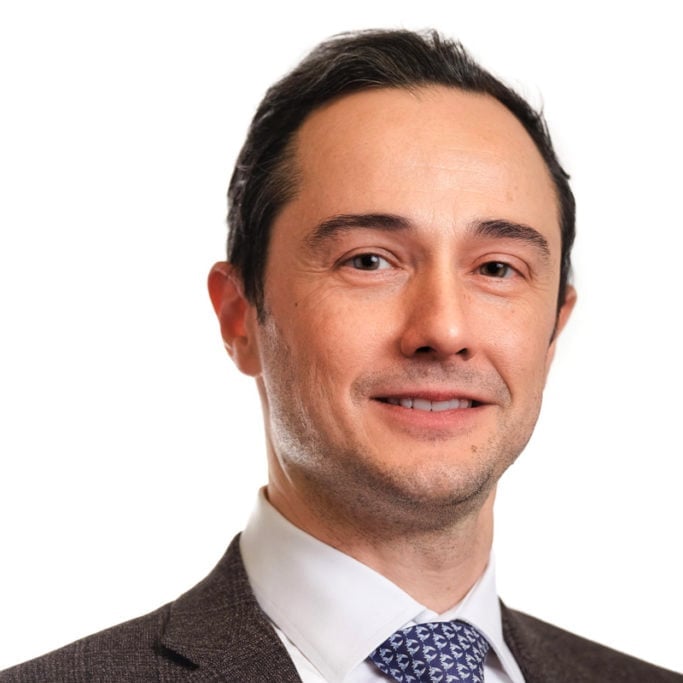
Luca Daffra, Senior Partner
What do you see as the main points that differentiate Studio Legale Ichino Brugnatelli e Associati from your competitors?
Our distinguishing characteristic lies in a deliberate combination that is rarely found together: the substantive depth of a specialist firm and the breadth of service expected of a full-service practice. With around fifty professionals, we are large enough to handle the most complex, multi-jurisdictional mandates, yet compact enough to ensure that senior partners remain personally engaged throughout every matter.
What sets us apart, in practice, is the quality of the relationship we build with each client. We do not operate as a transaction-processing machine. We act as long-term advisors — professionals who understand our clients' business, their sector dynamics, and their risk tolerance, and who engage with that knowledge every time we advise. This is particularly valued by our international clients, who come to us expecting the rigour and responsiveness they would expect from a leading firm anywhere in the world, combined with genuine local expertise and judgment that no global network can simply replicate from a distance.
Which practices do you see growing in the next 12 months? What are the drivers behind that?
The area of most significant growth for us is corporate restructuring and workforce reorganisation. We are operating in an environment defined by persistent macroeconomic pressure, the ongoing reconfiguration of supply chains, and accelerating sectoral transformation. Companies are responding by reassessing their footprints, their organisational structures, and their cost bases, and that invariably generates complex employment and industrial relations work.
Over the past year we have seen a marked increase in instructions relating to workforce restructuring, both from Italian groups and from multinational clients managing cross-border reorganisations with significant Italian dimensions. These are often high-stakes processes that require a combination of technical precision, regulatory knowledge, and — critically — an understanding of the industrial relations landscape in Italy, which remains one of the most demanding in Europe. We are well positioned to support clients through that complexity
What's the main change you've made in the firm that will benefit clients?
The most significant investment we have made recently is the development and implementation of an AI-powered legal research platform.
The practical impact is meaningful. It enables our lawyers to conduct deeper, faster, and more comprehensive research, which translates directly into higher quality analysis and more thoroughly grounded advice. It also allows us to redirect professional time away from information retrieval and towards the interpretive, strategic work that genuinely adds value for clients.
I want to be clear, however, that we regard this as a tool that augments professional judgment — not one that replaces it. If anything, it reinforces the importance of the lawyer's role. The ability to navigate a richer body of information, to identify what matters and what does not, and to frame sound advice in the context of a client's specific circumstances: that requires experienced legal thinking. Technology amplifies that; it does not substitute for it.
Is technology changing the way you interact with your clients, and the services you can provide them?
Yes, and in a way that is more nuanced than the headline narrative around AI might suggest. The conversation is often framed around efficiency and cost — technology reducing the time and resource required to deliver legal services. That is real, and it matters. But there is a dimension that receives less attention, and which we find more significant in the long run.
As technology handles more of the information-processing dimension of legal work, the centre of gravity shifts towards judgment, strategy, and relationship. Clients do not come to us because they need information — they can access information. They come to us because they need someone who can interpret that information, weigh the options, and guide them through decisions that carry real consequences. That advisory function — what I would describe as the capacity to be a trusted counsel, not merely a legal technician — becomes more important, not less, as technology advances.
In practical terms, this is shaping how we engage with clients. Our conversations are increasingly strategic. Clients want us alongside them in the room when decisions are being made, not simply retained to document the outcome. That is the direction in which we are deliberately building the firm
Can you give us a practical example of how you have helped a client to add value to their business?
One recent matter that I believe illustrates our capabilities well involved advising a major multinational corporation through a complex anti-relocation procedure before the competent Italian ministry.
These procedures are among the most demanding in Italian employment and industrial law: they sit at the intersection of regulatory compliance, industrial relations, corporate strategy, and political sensitivity, and they unfold under significant time pressure and public scrutiny. The client faced a situation in which the outcome would have material consequences not only for its workforce but for its broader operational structure in Italy.
Our role was to manage every dimension of that process — from the regulatory engagement and the interface with the ministry to the negotiations with trade unions and the development of a solutions framework that was both legally robust and commercially workable. The result was an outcome that protected the client's strategic interests while meeting the procedural requirements in full.
What the client valued, I think, was not simply the technical quality of the legal work — which is a baseline expectation — but the fact that we were able to manage a highly complex, multi-stakeholder process with consistency and composure, and to provide clear strategic direction at each stage
Are clients looking for stability and strategic direction from their law firms - where do you see the firm in three years’ time?
Clients are absolutely looking for stability and strategic direction. That has always been true of the best client relationships, but it has become more pronounced in an environment defined by rapid change and uncertainty. What clients want from their primary legal advisors is not a reactive resource they deploy when problems arise, but a partner who understands their business well enough to help them anticipate challenges and make better decisions — consistently, over time.
That is the positioning we are consolidating. In three years, I expect Studio Legale Ichino Brugnatelli e Associati to be recognised — as it already is in many quarters — as the Italian firm of choice for clients who require that quality of relationship: deep expertise, genuine senior engagement, and the judgment to navigate complexity with clarity.
The evolution of technology, including AI, makes this trajectory more compelling, not less. As information becomes more accessible and commoditised, the premium attaches increasingly to interpretation, strategy, and trusted counsel. The firms that invest in those capabilities — and in the relationships that allow them to exercise those capabilities effectively — will be well placed. That is precisely where we are focused