

Share on LinkedInShare on LinkedIn

ARTICLE · 04 MARCH 2026

The Trap Of Obviousness-Type Double Patenting When The Reference Case Has Different Ownership

Mintz, Levin, Cohn, Ferris, Glovsky and Popeo, P.C.
Contributor
Mintz, Levin, Cohn, Ferris, Glovsky and Popeo, P.C.

Mintz, Levin, Cohn, Ferris, Glovsky and Popeo, P.C.

Mintz is a litigation powerhouse and business accelerator serving leaders in life sciences, private...

View firm profile
Explore more from Mintz, Levin, Cohn, Ferris, Glovsky and Popeo, P.C.

An obviousness-type double patenting rejection ("ODP") over a reference patent or application with a different ownership entity creates a trap for the unwary...

United StatesIntellectual Property

1752506.jpg

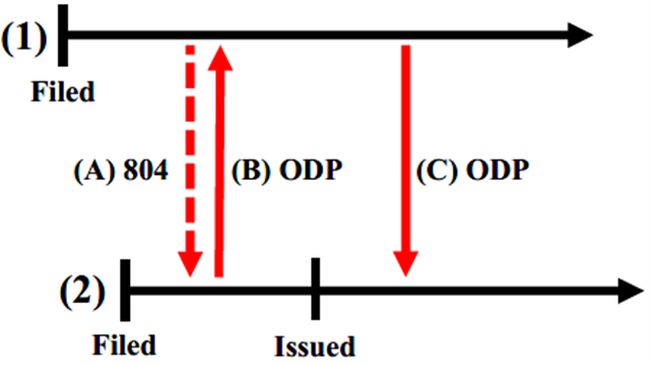
An obviousness-type double patenting rejection ("ODP") over a reference patent or application with a different ownership entity creates a trap for the unwary: the Patent Office can make an ODP rejection over a patent issued to a co-owner or a joint inventor, but a terminal disclaimer cannot be filed to overcome the ODP rejection because the ownership entity is different1. There are at least three scenarios involving this trap. First, and simplest for the applicant, when the reference case is the second-filed application, the ODP rejection is provisional and can be removed under MPEP § 804(I)(B)(1)(b)(i) (the "(A)" scenario). Second, when the reference case is the first-filed application or patent ("(B)"), the only option to overcome the rejection is to demonstrate that the claims are patentably distinct, i.e., claim a different invention.2 And third, when the reference case is the second-filed patent ("(C)"), the options to overcome the rejection are to

We operate a free-to-view policy, asking only that you register in order to read all of our content. Please login or register to view the rest of this article.

The content of this article is intended to provide a general guide to the subject matter. Specialist advice should be sought about your specific circumstances.

See more popular content from
